
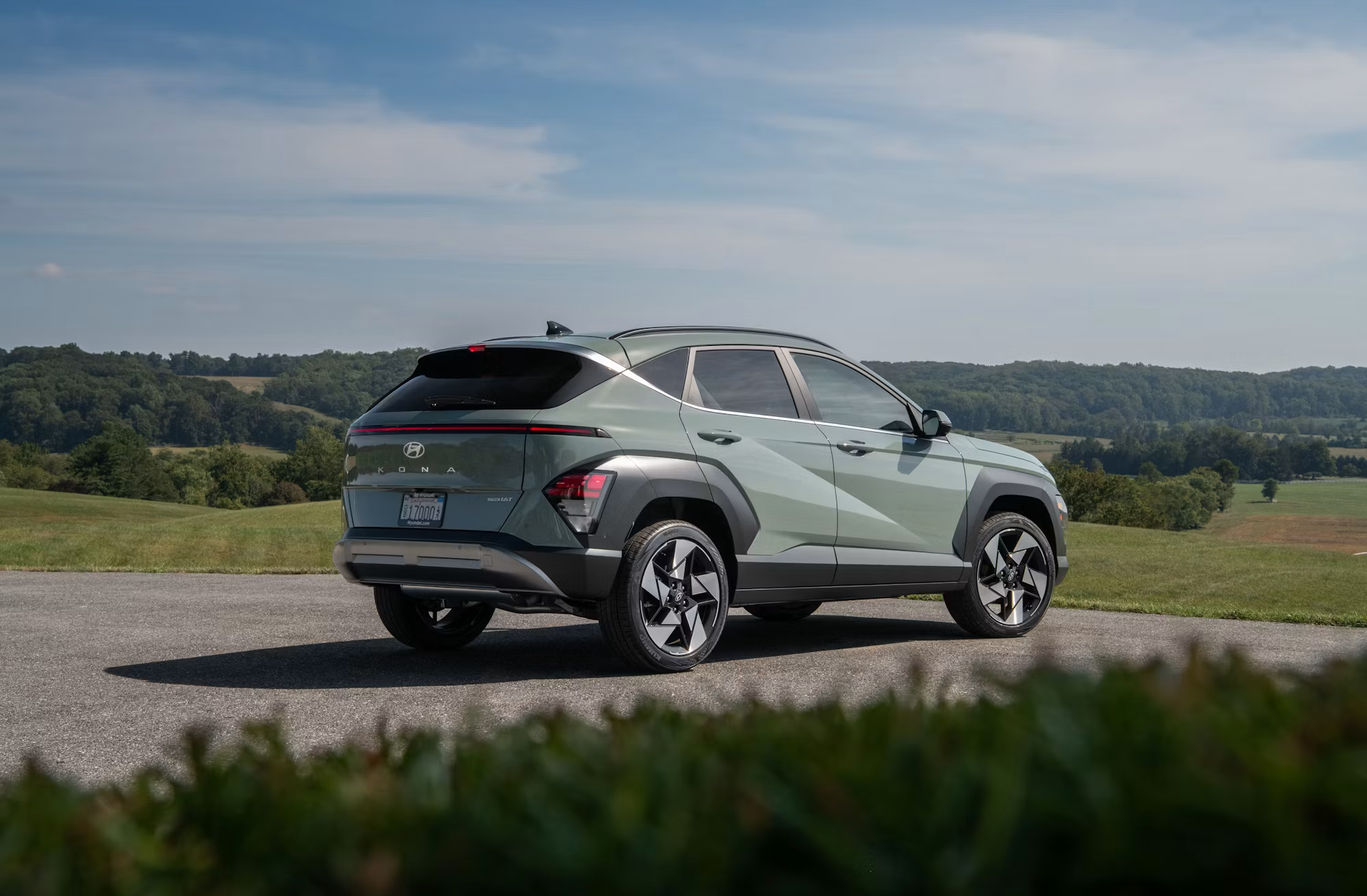
The SUV (Sport Utility Vehicle) has come a long way since its early days as a rugged, utilitarian vehicle designed to handle rough terrains and carry heavy loads. What was once a niche segment in the automobile industry has now become one of the most popular categories worldwide. In the past few decades, SUVs have evolved in response to changing consumer demands, advancing technology, and an increasing emphasis on comfort, safety, and style.
Today, the SUV market is more diverse than ever, offering vehicles ranging from compact crossovers to full-sized luxury behemoths. But how did the SUV transform from a functional vehicle into a highly sought-after family car, adventure machine, or luxury statement piece? This article takes a deep dive into the evolution of SUVs, exploring the key factors that have driven their transformation and highlighting some of the most popular models across different SUV categories.
The Early Days of the SUV: Built for Function, Not Luxury
The concept of the SUV can be traced back to the early 20th century, with military vehicles like the Jeep playing a pivotal role during World War II. Designed for off-road use, these vehicles were built for functionality, offering high ground clearance, four-wheel drive, and the ability to carry large loads. After the war, the demand for similar vehicles grew in the civilian market, especially in rural and farming communities where rugged terrain made traditional cars impractical.
In the 1950s and 1960s, vehicles like the Chevrolet Suburban and the Land Rover Defender helped solidify the SUV as a go-to option for those needing a reliable off-road vehicle with plenty of cargo space. These early SUVs were functional, simple, and largely utilitarian, with limited focus on comfort or technology. Their purpose was clear: transport people and goods to places other vehicles could not go.
However, it wasn’t until the 1980s that SUVs began to gain widespread popularity in North America. The introduction of vehicles like the Jeep Cherokee and the Ford Bronco brought SUVs to the masses. These models combined off-road capability with the comfort and styling of passenger vehicles, making them more appealing to a broader audience.
The Rise of the Crossover: Combining Comfort with Utility
As consumer tastes evolved, so did the SUV. By the late 1990s and early 2000s, automakers began to introduce crossover SUVs—vehicles that blended the features of traditional SUVs with the handling and fuel efficiency of cars. Crossovers are built using unibody construction, as opposed to the body-on-frame design of traditional SUVs, which gives them a lighter, more car-like feel while still offering higher ground clearance and the ability to tackle rough terrain.
This shift led to the emergence of models like the Toyota RAV4 and the Honda CR-V, which became some of the best-selling vehicles in the United States. These compact SUVs offered the practicality of a larger vehicle, but without the bulk and fuel consumption of a full-size SUV or truck. Crossovers prioritized comfort and fuel efficiency, with less emphasis on off-road capability, which appealed to urban families looking for a versatile car that could handle city commutes and occasional road trips.
Popular Early Crossovers:
– Toyota RAV4: Launched in 1994, the Toyota RAV4 helped define the crossover segment. Its compact size, spacious interior, and fuel efficiency made it an immediate hit with consumers.
– Honda CR-V: The Honda CR-V, introduced in 1995, offered similar benefits, with a reputation for reliability, affordability, and practicality.
– Ford Escape: In 2000, Ford introduced the Escape, which combined small SUV versatility with car-like handling and fuel economy, further cementing the crossover’s place in the market.
By the mid-2000s, crossovers were no longer just a niche segment—they were taking over. Families seeking a practical, comfortable, and affordable alternative to minivans turned to these vehicles. Meanwhile, carmakers continued to refine the design, adding more technology and advanced features to meet the demands of modern drivers.
Luxury SUVs: The Intersection of Performance and Prestige
As SUVs became more popular, luxury automakers quickly recognized the potential of the segment. By the late 1990s, brands like Mercedes-Benz and BMW began to introduce luxury SUVs that combined the performance and prestige of their sedan lines with the ruggedness and utility of traditional SUVs. These high-end vehicles were designed for wealthy consumers who wanted the best of both worlds: top-tier performance, advanced technology, and the ability to tackle any road condition.
One of the earliest and most iconic luxury SUVs was the Mercedes-Benz M-Class, launched in 1997. The M-Class combined a premium interior with a refined driving experience, all while maintaining the off-road capability that was characteristic of the brand’s rugged heritage. Shortly after, BMW introduced the X5, another game-changing luxury SUV that emphasized sportiness, handling, and driving dynamics alongside comfort and luxury.
Popular Luxury SUVs:
– BMW X5: Since its debut in 1999, the BMW X5 has been one of the most successful luxury SUVs. It set the standard for combining sportiness with luxury, offering a range of powerful engines and a refined cabin.
– Mercedes-Benz G-Class: Known for its distinctive boxy shape and legendary off-road capability, the Mercedes-Benz G-Class has become a status symbol in the luxury SUV market.
– Audi Q7: The Audi Q7, launched in 2005, offered three rows of seating, a luxurious interior, and cutting-edge technology, making it a favorite among high-end buyers.
The introduction of luxury SUVs fundamentally changed the SUV market. No longer were these vehicles seen solely as practical tools for transporting goods or off-roading. Luxury SUVs quickly became status symbols, offering a blend of performance, comfort, and technology that appealed to affluent consumers. Over time, automakers refined their designs, adding features like advanced infotainment systems, premium audio systems, and driver assistance technologies.
The Explosion of Hybrid and Electric SUVs
As the automotive industry began to focus more on sustainability and reducing carbon footprints, hybrid and electric SUVs entered the market as an eco-friendly alternative to traditional gas-powered models. The first hybrid SUVs, such as the Toyota Highlander Hybrid and Ford Escape Hybrid, offered the benefits of better fuel efficiency and lower emissions, while maintaining the space and utility that SUV buyers loved.
More recently, electric SUVs have gained traction, with models like the Tesla Model X and the Ford Mustang Mach-E leading the charge. These electric SUVs combine zero-emission performance with the versatility and cargo space typical of the SUV segment. The rise of electric SUVs is a direct response to growing environmental concerns and changing consumer preferences, and it represents a key turning point in the evolution of the SUV.
Popular Hybrid and Electric SUVs:
– Tesla Model X: Known for its futuristic design and all-electric performance, the Tesla Model X has become a symbol of the electric SUV revolution. It offers a long range, quick acceleration, and cutting-edge technology.
– Ford Mustang Mach-E: The Mach-E marks Ford’s entry into the electric SUV market. With bold styling and impressive performance, it offers an alternative to traditional gasoline-powered SUVs.
– Toyota RAV4 Hybrid: The hybrid version of the Toyota RAV4 offers all the practicality of the standard model, but with improved fuel efficiency and a lower environmental impact.
The electric SUV market is still in its early stages, but it’s clear that electric and hybrid SUVs are the future of the automotive industry. As battery technology improves and more charging infrastructure is built, electric SUVs are poised to become more mainstream, offering an environmentally friendly alternative without sacrificing utility or performance.
The Future of SUVs: Technology, Performance, and Sustainability
Looking ahead, SUVs are expected to continue evolving in response to consumer demand for more technology, better performance, and improved fuel efficiency. Advanced safety features, such as adaptive cruise control, lane-keeping assist, and automatic emergency braking, have become standard on many models, ensuring that SUVs remain among the safest vehicles on the road.
In addition to technology, the focus on sustainability will likely drive the next phase of SUV innovation. Hybrid and electric powertrains will become more commonplace, and automakers will continue to refine their designs to make SUVs even more fuel-efficient and eco-friendly. Autonomous driving technology may also play a role in the future of SUVs, with some manufacturers already testing self-driving systems in their vehicles.
As SUVs continue to dominate the market, there’s no doubt that they will remain an integral part of the automotive landscape. From compact crossovers to full-sized luxury models, the modern SUV is a testament to the adaptability and innovation of the automobile industry.
Conclusion
The SUV has undergone a remarkable transformation over the past few decades. From rugged, utilitarian vehicles designed for off-road use to luxury cars and electric machines built for sustainability, SUVs have evolved to meet the changing needs of consumers. Whether you’re looking for an eco-friendly electric SUV, a family-friendly crossover, or a high-performance luxury vehicle, today’s SUV market offers something for everyone. As automakers continue to innovate, it’s clear that the future of SUVs will be defined by technology, performance, and sustainability.
